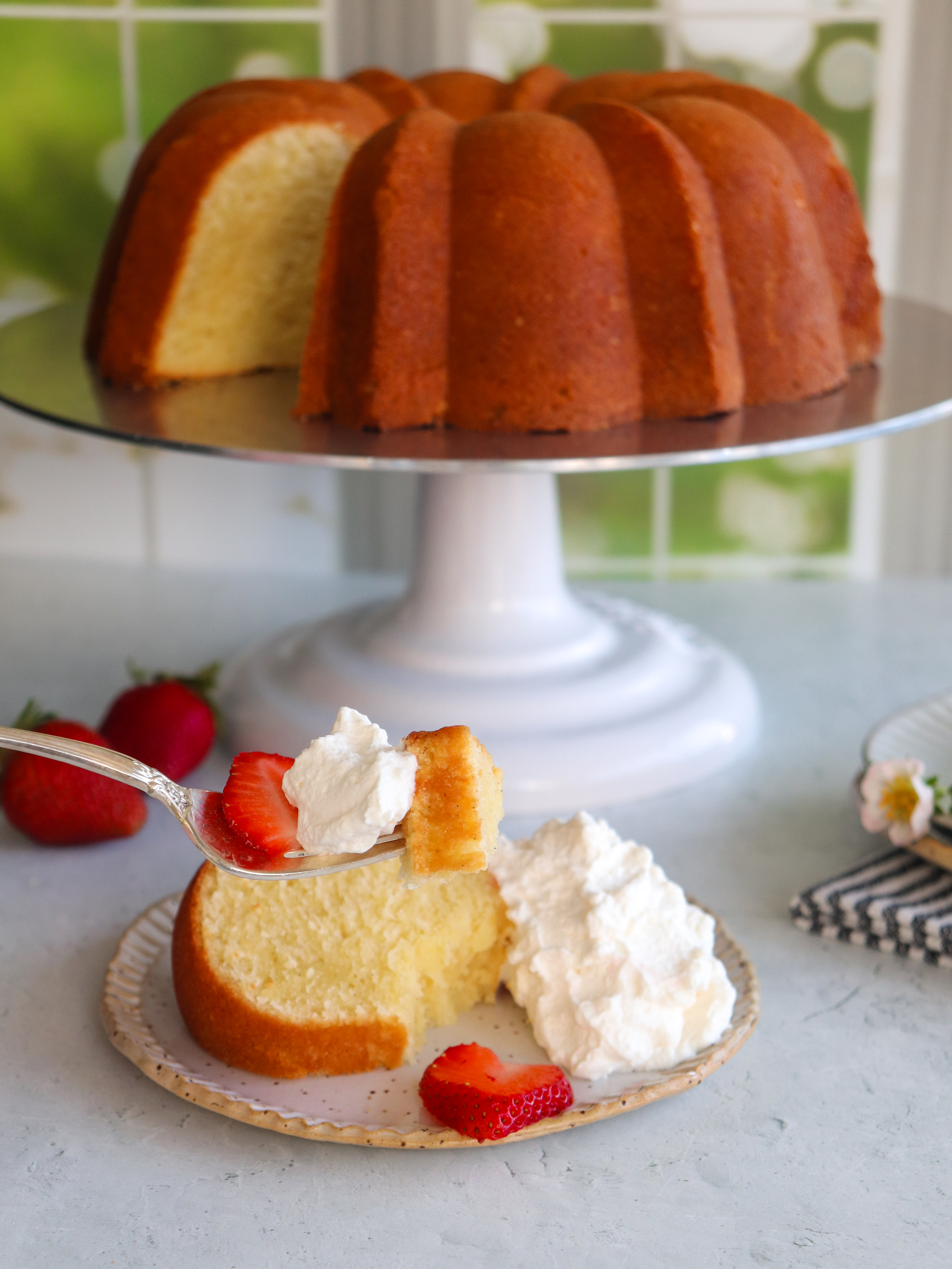
We’ve all been there: you’re craving a classic, dense-yet-tender slice of pound cake to go with your afternoon coffee. You pull one out of the oven, slice into it, and… thud. It’s dry, crumbly, and leaves you reaching for a glass of milk just to get it down.
There is nothing more disappointing than a dry pound cake. It’s supposed to be the ultimate comfort food—rich, buttery, and luxurious. After years of testing and tweaking, I’ve finally perfected a “tried and true” recipe that guarantees a moist, velvety crumb every single time. The secret? A strategic combination of butter, oil, and sour cream that keeps this cake incredibly tender for days.
This isn’t just your average pound cake, though. I’ve leveled it up with a bright, aromatic punch of fresh lemon and a double-hit of vanilla—using both scraped vanilla bean pods and pure extract to give it a sophisticated depth of flavor that store-bought cakes just can’t touch.
Here is how to bake the ultimate moist pound cake.
Why You’ll Love This Recipe
- The Texture: The sour cream and vegetable oil work together to keep the cake moist, while the butter provides that signature pound cake structure.
- The Flavor Profile: By using both vanilla bean pods and pure vanilla extract, you create a deep, aromatic base that perfectly complements the zesty, sharp bite of fresh lemon.
- The Versatility: It’s perfect served plain with a cup of coffee, topped with a simple lemon glaze, or served with a dollop of fresh whipped cream and berries.


Equipment Needed:
Bundt Pan – The Recommendation: 10-12 Cup Tube Pan: This is essential for proper heat circulation. Because pound cakes are dense, the center tube ensures the middle of the cake bakes through before the edges burn.
Tip: Light-colored metal pans are best. They reflect heat, ensuring your cake bakes evenly without the edges getting burnt before the center is set. If you use a dark non-stick pan, consider lowering your oven temperature by 25°F.
Stand or Hand Mixer – A pound cake relies on the technique of creaming—beating butter, sugar and vegetable oil together until light and fluffy. This is what aerates the batter and gives the cake its lift.
A Fine Zester (Microplane) – Since we are making a lemon pound cake, the zest is where the concentrated flavor lives. You want those tiny, fragrant curls of yellow peel without any of the bitter white pith.
A Citrus Juicer – Freshly squeezed lemon juice is non-negotiable. Bottled juice often has a metallic or “off” taste that can ruin a delicate cake.
A Kitchen Scale – Baking is a science, and volume measurements (like measuring cups) can be wildly inaccurate. One person’s “cup of flour” can weigh significantly more than another’s. Using a digital kitchen scale for measuring your flour and sugar in grams will ensure your cake is moist and consistent every single time you bake it.
A Silicone Spatula – You’ll spend a lot of time scraping down the sides of your bowl to ensure the butter and eggs are perfectly emulsified. A flexible spatula is the best tool for getting every last bit of batter out of the bowl and into the pan.
A Cooling Rack – Patience is the hardest part of baking a pound cake. It needs to cool in the pan for about 15-20 minutes, then be transferred to a wire rack. This allows air to circulate underneath the cake, preventing the base from getting soggy from trapped steam.
Ingredients:
- 1 cup (230 grams) butter, softened
- ½ cup (120 ml) vegetable oil
- 2 ½ cups (500 grams) granulated sugar
- 3 cups (360 grams) all-purpose flour
- 1 teaspoon baking powder
- ½ teaspoon kosher salt
- ¼ cup (60 grams) lemon juice
- zest of 1 lemon
- *2 vanilla bean pods (split and scraped) + 1 tablespoon pure vanilla extract
- 5 large eggs, room temperature
- 1 cup (240 grams) sour cream, room temperature
*you can substitute 1 tablespoon vanilla bean paste or 2 tablespoons pure vanilla extract
Instructions:
1. Preheat your oven to 325°F (165°C). Grease and flour a standard loaf pan or a Bundt pan thoroughly. Room temperature ingredients are the key to a smooth batter, so make sure your eggs, butter, and sour cream aren’t cold.
2. In a large mixing bowl (or stand mixer), beat the softened butter, vegetable oil, and granulated sugar together on medium-high speed for 5 minutes. You want this to look light and fluffy. Please don’t rush this step!
3. Scrape the seeds from your vanilla bean pods and add them to the butter mixture along with the vanilla extract, and lemon zest. Mix until incorporated.
4. Add your eggs one at a time, beating well after each addition.
5. In a separate bowl, whisk together the flour, baking powder, and salt. Add about one-third of the flour mixture to the butter, followed by half of the sour cream. Repeat, ending with the final portion of flour. Fold in the lemon juice at the very end. Be careful not to overmix—just stir until the flour streaks disappear.
6. Pour the batter into your prepared pan. Bake for 60–75 minutes, or until a tester inserted into the center comes out clean or with a few crumbs.
7. Let the cake cool in the pan for about 15-20 minutes before turning it out onto a wire rack. While it’s tempting to slice it while warm, this cake is best when allowed to cool completely, as it allows the structure to settle and the moisture to redistribute.
Pro-Tips for Success
- Room Temp is Key: Ensure your eggs, butter, and sour cream are all at room temperature. Cold ingredients won’t emulsify properly.
- Don’t Over-Bake: Pound cake is dense by nature; start checking it at the 60-minute mark. Over-baking is the quickest way to kill the moisture we worked so hard to create.
- The Patience Rule: Pound cake actually tastes better on its second day. Wrap it tightly in plastic wrap once completely cooled; the moisture will redistribute, and the vanilla flavor will deepen overnight.


Tag me if you make this yummy pound cake. I would love to hear from you and see your photos!